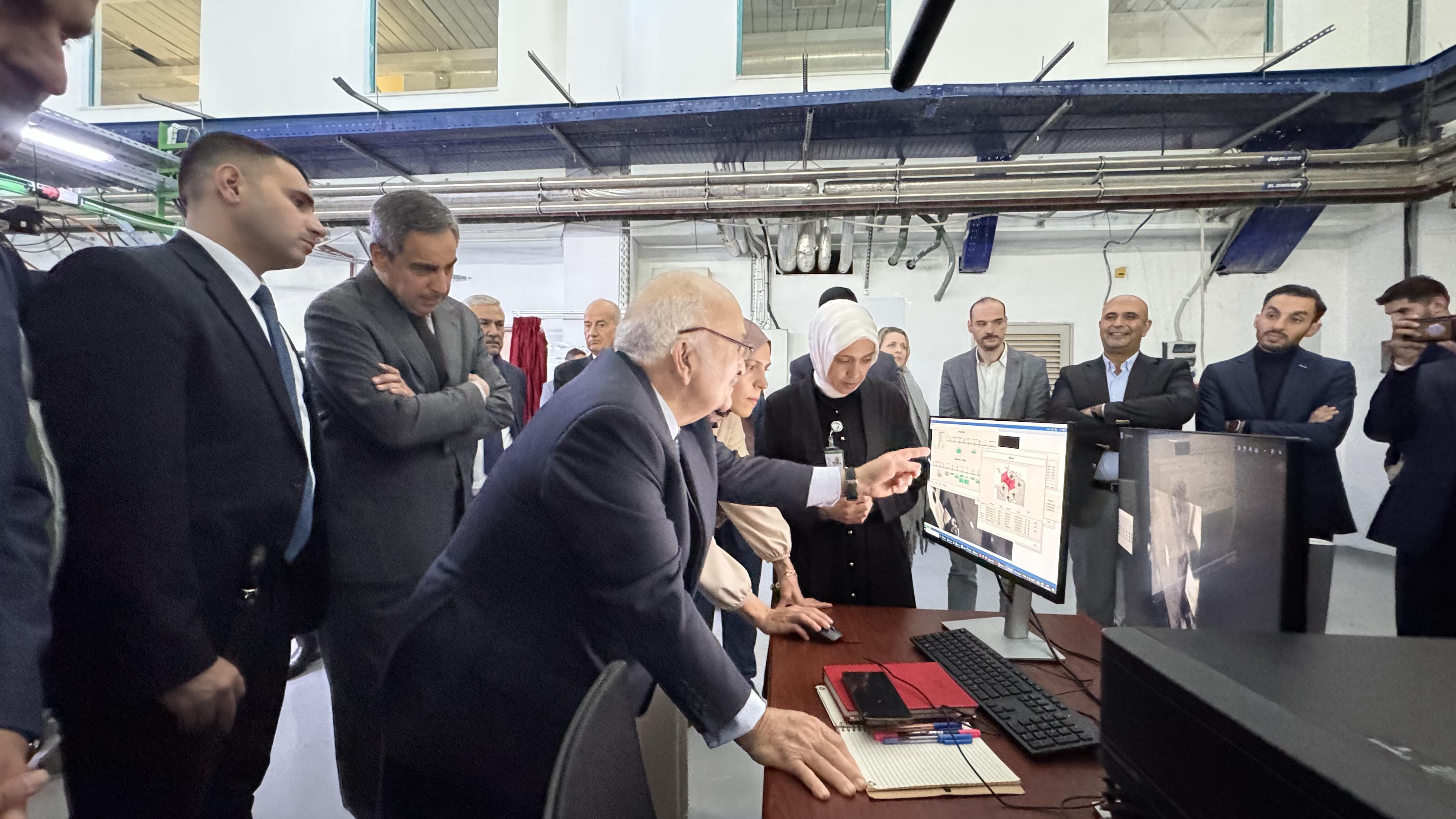

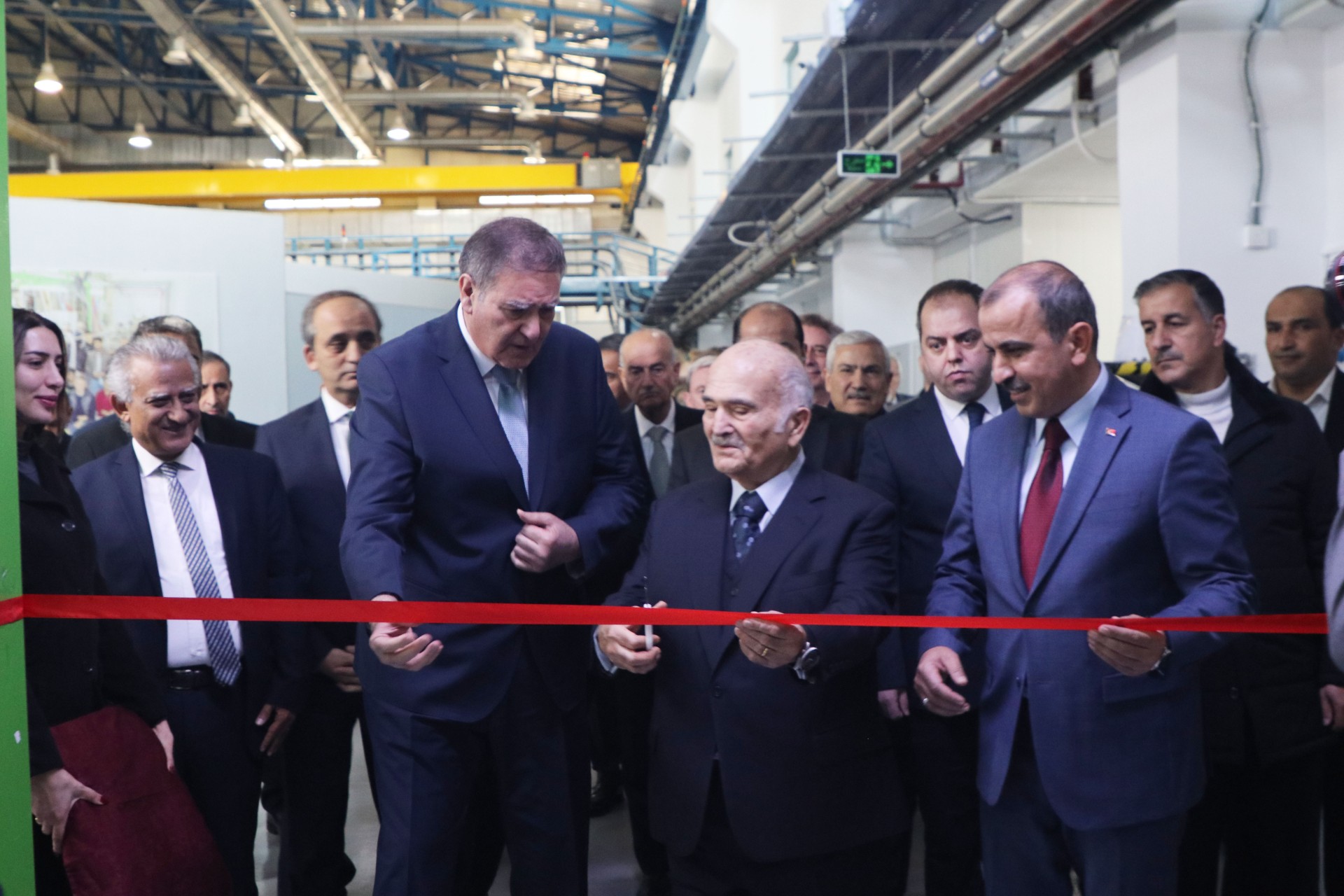
The inauguration of the Turkish X-ray Photoelectron Spectroscopy (TXPES) beamline at SESAME celebrated a landmark achievement for both the facility and regional scientific collaboration. The ceremony was held under the patronage, and in the presence of, His Royal Highness Prince El Hassan bin Talal. It was hosted by Dr Abdullah Buğrahan Karaveli, President of TENMAK (Turkish Energy, Nuclear, and Mineral Research Agency) and co-Vice President of the SESAME Council, Dr Khaled Toukan, Director of SESAME, and Professor Rolf-Dieter Heuer, President of the SESAME Council.
Among the dignitaries present in the celebration were the Ambassadors of Bulgaria, Canada, Czech Republic, France, Ireland, Malaysia, Slovenia, and Türkiye, the chargés d’affaires of the Islamic Republic of Iran and of Pakistan, and Poland, the Deputy Heads of Mission of Austria, Greece, Oman and Switzerland, and members of the diplomatic corps of China, Egypt and the EU, as well as the Governor of Al-Balqa’ Governorate, high-level representatives from Türkiye and the international scientific community, and Jordanian officials.
The strategic importance of this new capability for materials and surface science in the Middle East was highlighted by all.
TXPES brings to SESAME one of the most powerful surface-analysis techniques in modern research, rooted in Einstein’s explanation of the photoelectric effect and developed into high-precision spectroscopy by Nobel Laureate Kai Siegbahn. Its integration as a dedicated branchline to the HESEB facility allows high-resolution, tunable soft X-ray measurements essential for studies in catalysis, semiconductors, thin films, corrosion, hydrogen technologies, and energy materials.
The inauguration crowns a multi-year collaboration between SESAME, TENMAK, TARLA (Turkish Accelerator and Radiation Laboratory), Bilkent University, Koç University and SPECS spanning the years 2020 to 2025, which included the design, industrial manufacturing, installation, and integration of the beamline.
In his address, HRH Prince El Hassan emphasized the unifying role of science, noting that “science is, at its heart, a shared human endeavour — one that unites rather than divides, and one that builds bridges where they are most needed.” He praised the beamline as “a message of friendship and of shared responsibility,” reflecting Türkiye’s commitment to regional cooperation.
Dr. Khaled Toukan underlined the scientific impact of the new facility, stating that “this beamline represents a major step forward… strengthening SESAME’s entire scientific portfolio and giving young scientists new opportunities to develop expertise at the frontier of materials and surface science.”
Dr. Abdullah Buğrahan Karaveli, on behalf of TENMAK and the TXPES consortium, stated that TXPES is the first beamline at SESAME to be designed and constructed by the national community of a SESAME Member, and as such, it presents Türkiye’s scientific capacity and technological competence on an international platform. The President emphasized Türkiye’s full adherence to its commitments to SESAME, highlighting both its financial contributions and its dedicated national mechanisms supporting researchers. He underscored that the TXPES beamline, designed and constructed by Türkiye’s scientific community, reflects the country’s technological capability. He also reaffirmed TENMAK’s role as the national focal point for major international scientific organizations and Türkiye’s commitment to strengthening cooperation in energy, nuclear and mineral research.
More than a technological achievement, the TXPES beamline stands as a remarkable example of science diplomacy—uniting Türkiye, Germany, Jordan and SESAME’s Members in advancing research, training, and innovation for the region.