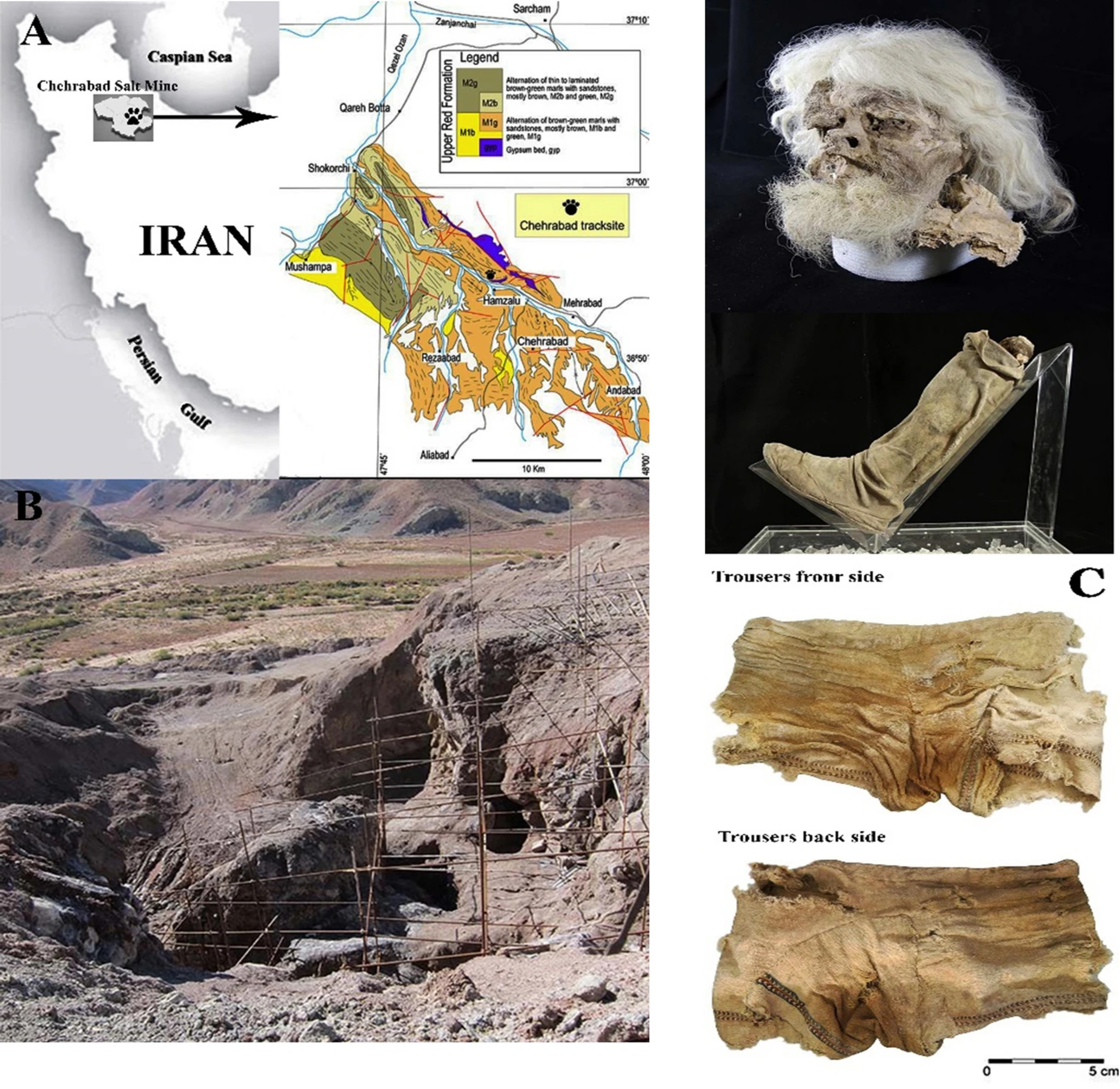

A recent study published in Scientific Reports (Nature) and conducted at the BM02-IR Beamline has examined the composition of natural dyes preserved in wool textiles recovered from the Chehrabad salt mine (Iran), dating to the Sassanid period (220–390 A.D.). Archaeological and geoarchaeological evidence, including numerous remains found around the mine, has confirmed that the site was exploited from the Achaemenid to the Islamic periods.
The discovery of naturally mummified remains in the Chehrabad salt mine, located in north-western Iran, marked a major milestone in the Iranian archaeology. Unearthed in the early 1990s, these mummies were remarkably well-preserved due to the high salinity of the environment. Among the findings, Saltman No. 1, identified by his distinctive woollen clothing, has become a central figure in the study of ancient textile technologies and burial practices.
The recent synchrotron study revealed molecular-level interactions between natural dyes and wool fibres—particularly within the amide (protein) and lipid regions—offering new insight into the dye–fibre binding mechanisms employed in antiquity.
The research demonstrates that synchrotron FTIR spectroscopy can characterise dye compounds and their interactions in historical textiles with high precision and without causing damage to the artefacts. The findings provide valuable new perspectives on Sassanid dyeing practices, shedding light on regional preferences, natural dye sources, and technical methods, while underscoring the strength of modern physico-chemical approaches in cultural heritage research.
The full study is available at: https://doi.org/10.1038/s41598-025-25106-0
Reference:
Dehkordi, M. H., Kamel, G., Rozatian, A. S. H., et al. (2025). Revealing Sassanid dyeing practices through synchrotron FTIR. Scientific Reports, 15, 41318.