
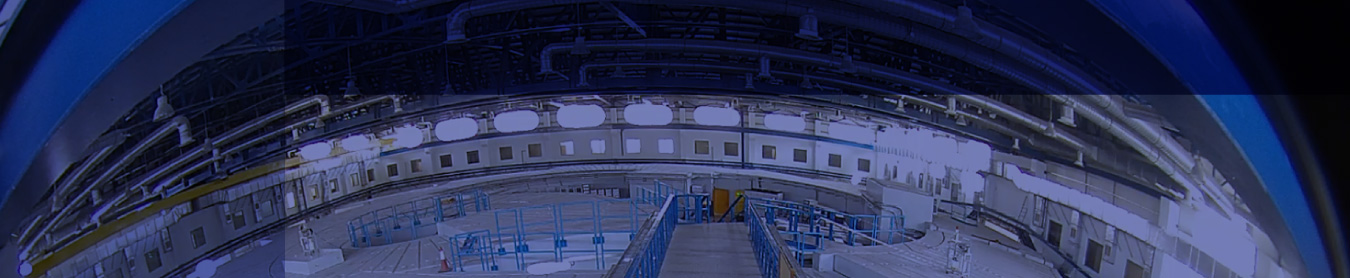

BERLIN, GERMANY — September 11, 2026 — In a major breakthrough for international science diplomacy, Germany today signed an agreement whereby it assumed Associate Membership of SESAME (Synchrotron-light for Experimental Science and Applications in the Middle East) thereby becoming the first country to hold this status.
This signature, which took place in a high-profile ceremony hosted by the Federal Ministry of Research, Technology and Space (BMFTR) in Berlin, marks the formal elevation of a deeply-rooted, foundational partnership between Germany and SESAME, the first truly major international research center in the Middle East.
Germany’s upgrading of its association with SESAME to Associate Membership integrates a heavyweight in advanced science into the SESAME family, thereby fostering greater opportunities for joint research, knowledge transfer, and groundbreaking technical synergies across fields such as structural biology, materials science, environmental studies, and cultural heritage.
The agreement also carries immense diplomatic weight as a firm endorsement of science diplomacy and cross-border cooperation in a fractured geopolitical landscape.
H.E. Fayiz Khouri, Ambassador of the Hashemite Kingdom of Jordan to the Federal Republic of Germany, emphasized the deep diplomatic bonds and collaborative spirit formalized by this milestone: "With today's signing, Germany formally joins SESAME as an associate member — a step that reflects both Germany and Jordan's shared belief in science as a bridge between nations. This partnership lays new foundations for cooperation, trust, and shared discovery across our region and beyond. It is a partnership we look forward to building on in the years ahead, as SESAME continues to bring together scientists from across our region in a common pursuit of knowledge. "
Dr. Khaled Toukan, Director of SESAME, highlighted how this membership will serve as a strong beacon of hope for regional cooperation: "Germany’s decision to join SESAME as an Associate Member carries immense diplomatic weight. It is a resounding endorsement of science diplomacy as a tool for global stability", he stated. "Germany is not just funding a scientific facility; it is actively investing in an oasis of peace, dialogue, and stability in the Middle East."
Dr. Marcus Pleyer, State Secretary of the Federal Ministry of Research, Technology and Space, spoke on Germany’s long-term commitment to fostering cutting-edge innovation and stability across borders: "Today, Germany’s longstanding cooperation with, and commitment to, SESAME was taken to a new level with the signing of the agreement to become the first associated member of SESAME. Hereby we are sending a clear signal: Science has no borders and Science Diplomacy is more important than ever. Germany is proud to formalize its commitment to SESAME, an institution whose very physical foundation is linked to our shared scientific history. Our Associate Membership is an investment not only in world-class, cross-border research pipelines—from structural biology to green energy—but also in the vital stabilization and prosperity of the Middle East through peaceful collaboration."
The signing of this historic agreement will help guarantee that the next generation of young physicists, engineers, and researchers will possess the global backing, tools, and networks necessary to unravel the mysteries of matter while actively building sustainable bridges of understanding in the contemporary world.

NOTES FOR EDITORS:
- Germany's association with SESAME dates back to the early 2000s when it donated components of the BESSY I machine in West Berlin that had been decommissioned in 1999 – following the re-unification of Germany, it had been decided to build a larger machine in East Berlin. With this gift SESAME had the synchrotron radiation source that opened the door to the beginnings of the creation of a synchrotron light facility in Jordan.
- Germany’s support did not stop there. Throughout the years, it has provided very substantial support that has allowed SESAME to develop into the fully-fledged synchrotron facility it now is, attracting users from more than 70 countries. Some notable examples are the design and construction, by a consortium of 5 research centres of the Helmholtz Association of German Research Centers under the lead of DESY, of SESAME’s soft X-ray ID11L-HESEB beamline that was officially inaugurated in June 2022, and an 18-month project for a resilient cybersecurity computing infrastructure at SESAME funded by the Wilhelm and Else Heraeus Foundation.
- SESAME (Synchrotron-light for Experimental Science and Applications in the Middle East) is a 2.5 GeV synchrotron light source that was officially inaugurated on 16 May 2017 by H.M. King Abdullah II. It is the first light source in the Middle East and neighbouring countries, and also the region's first true international centre of excellence. There are some 50 synchrotron light sources in the world, including a few in developing countries.
- The Council is the governing body of SESAME. The first two Presidents of the Council, Professor Herwig Schopper (2004-2008) and Professor Sir Chris Llewellyn Smith (2008-2017), as well as the current, third President, Professor Rolf-Dieter Heuer (2017-), are all former Directors General of CERN.
- SESAME is an Associate of LEAPS (League of European Accelerator-Based Photon Sources). It forms part of the INFN-CHNet network dedicated to cultural heritage of the Italian INFN (Istituto Nazionale di Fisica Nucleare) and it hosts an INFN-CHNet laboratory on its premises.
- The Members of SESAME are currently Cyprus, Egypt, Iran, Israel, Jordan, Pakistan, Palestine and Türkiye (others are being sought).
- Brazil, Canada, China, France, Germany, Greece, Italy, Japan, Kuwait, Portugal, the Russian Federation, Spain, Sweden, Switzerland, the UAE, the UK, and the USA are Observers as are CERN and the European Union. Like CERN, SESAME was set up under the auspices of UNESCO, but is now a completely independent intergovernmental organisation.
- SESAME both:
- Fosters scientific and technological capacities and excellence in the Middle East and neighbouring regions (and helps prevent or reverse the brain drain) by enabling world-class research in subjects ranging from biology and medical sciences through materials science, physics and chemistry to cultural heritage - much focussed on issues of regional importance, e.g. related to the environment, health, and agriculture, and
- Builds scientific links and fosters better understanding through collaboration between peoples with different creeds and political systems.
- Synchrotron light sources are equipped with beamlines that focus the light on samples that scientists wish to study. SESAME will be exploited in up to 20 or more experiments operating simultaneously on independent beamlines.
- SESAME currently operates six beamlines, with two more in design; the facility can ultimately host over twenty. The first two, both commissioned in 2018 and fed by bending-magnet sources, are the BM08-XAFS/XRF spectroscopy beamline and the BM02-infrared spectromicroscopy beamline. The BM08-XAFS/XRF beamline welcomed its first users in July 2018, yielding SESAME’s first peer-reviewed publication (a Turkish study on the catalytic valorisation of glycerol) and has supported work on inter alia batteries, catalysis and environmental pollution. The BM02-IR beamline opened on 4 November 2018 and has since enabled research from medicine to cultural heritage, including analyses of ancient human teeth to trace copper uptake from early metallurgy. Further growth includes the materials science/powder diffraction ID09-MS/XPD beamline in user operation since December 2020. In February 2024, user operations at the EU-funded ID10-BEATS tomography beamline began, thus delivering high-flux microtomography and demonstrating its ability to virtually “read” fragile rolled papyri. The ID11L-HESEB (HElmholtz-SEsame Beamline) soft X-ray beamline, funded by the Helmholtz Association of German Research Centers and constructed by five institutes of the Association, hosted its first users in February 2024, and so provided techniques to probe electronic structures and chemical environments. The sixth beamline, the Turkish soft X-ray PhotoElectron Spectroscopy ID11R-TXPES beamline was inaugurated in December 2025 and will be receiving its first users in 2026. It is the first beamline at SESAME to have been designed, built, and operated by the national community of one of its Members, and a share of its beam time is reserved for users from Türkiye.
- The users of SESAME are based in universities and research institutes in the region. They visit the laboratory periodically to carry out experiments, where they are exposed to the highest scientific standards. The potential user community, which is growing rapidly and already numbers over 2,300 from 73 countries, has been, and is being, fostered by a series of Users' Meetings and by training opportunities (supported by the European Union, the IAEA, the Rutherford Fund (UK), various governments and many of the world's synchrotron laboratories) which are bringing significant benefits to the region.
- In July 2018, SESAME opened its doors to its first users. During the years 2017-2025, it issued eleven calls for proposals for beam time, and a total of 1299 proposals were received. A twelfth call is currently open. While the majority came from scientists in its Members, proposals were also submitted by users from 48 other countries across all continents.
- Beam time has been granted for 622 of the proposals received. In chemistry and materials science the experiments carried out so far ranged from the fabrication of single-atom catalysts to the synthesis of advanced porous materials enabling continuous, self-optimizing atmospheric water harvesting, to advances in sodium-ion battery cathodes. In the life sciences, examples go from mapping the biochemical spectrum of inflammatory versus non-inflammatory breast cancer cells to the analysis of Al-induced Alzheimer’s disease in rat brain cortical tissue. As a cultural-heritage application, examples are the non-destructive examination of ancient vitreous materials and of ancient manuscripts from the Quran.
- 180 peer-reviewed publications have already resulted from experiments carried out at SESAME. The average scientific impact factor of the journals in which these papers have been published is 5.6, with 20% of them being in journals having an impact factor greater than 7.
- Users visiting the Facility for their experiments are accommodated at SESAME’s Sergio Fubini Guest House located on its campus that was constructed with funds generously provided by the Government of Italy represented by the Ministry for Education, University and Research through INFN. During periods when it is not needed by SESAME, the Guest House may provide a venue for regional meetings on other topics (such as agriculture, water resources and pollution) in secure and easily accessible surroundings, thus furthering SESAME’s mission as a focal point for regional cooperation
- Since February 2019 when SESAME’s solar power plant was inaugurated, SESAME is the world’s first large accelerator complex to be fully powered by renewable energy, thus making it the world’s first carbon neutral accelerator laboratory. This makes SESAME economically, as well as environmentally sustainable. SESAME has signed the UN’s Climate Neutral Now pledge.
- Some US$139 million have so far been invested in SESAME (including the value of the land and building provided by Jordan and of donated equipment, and all operational costs). Staff costs, provision of power, and other operational costs are provided by the Members’ annual contributions. Capital funding has been provided by the Governments of Israel, Jordan, and Türkiye, the Royal Court of Jordan, and by the European Union (through CERN and directly), the IAEA, Germany, Italy and Switzerland, and equipment that became surplus to requirements has been donated by Canada, France, Germany, Italy, Spain, Switzerland and the U.K.
- Challenges for the future include: funding for construction of an MX (Macromolecular/protein crystallography), SAXS/WAXS (Small-Angle and Wide-Angle X-ray Scattering) and VUV (Vacuum Ultraviolet) spectroscopy beamline to complete the suite of SESAME’s Phase I beamlines; funding for construction of a 100 MeV Linac to replace SESAME’s Microtron, which is a first step towards a full energy injector, and of an administrative building.
Further Information
SESAME website: https://www.sesame.org.jo
Contact Atef Elkadime (Email)